Cost Guides
How Much Does It Cost to Paint a House Exterior? (Denver Guide, 2026)
Exterior painting in Denver typically runs $4,500–$16,000 depending on home size, surface, and prep. What drives the price and 2026 Denver cost ranges.
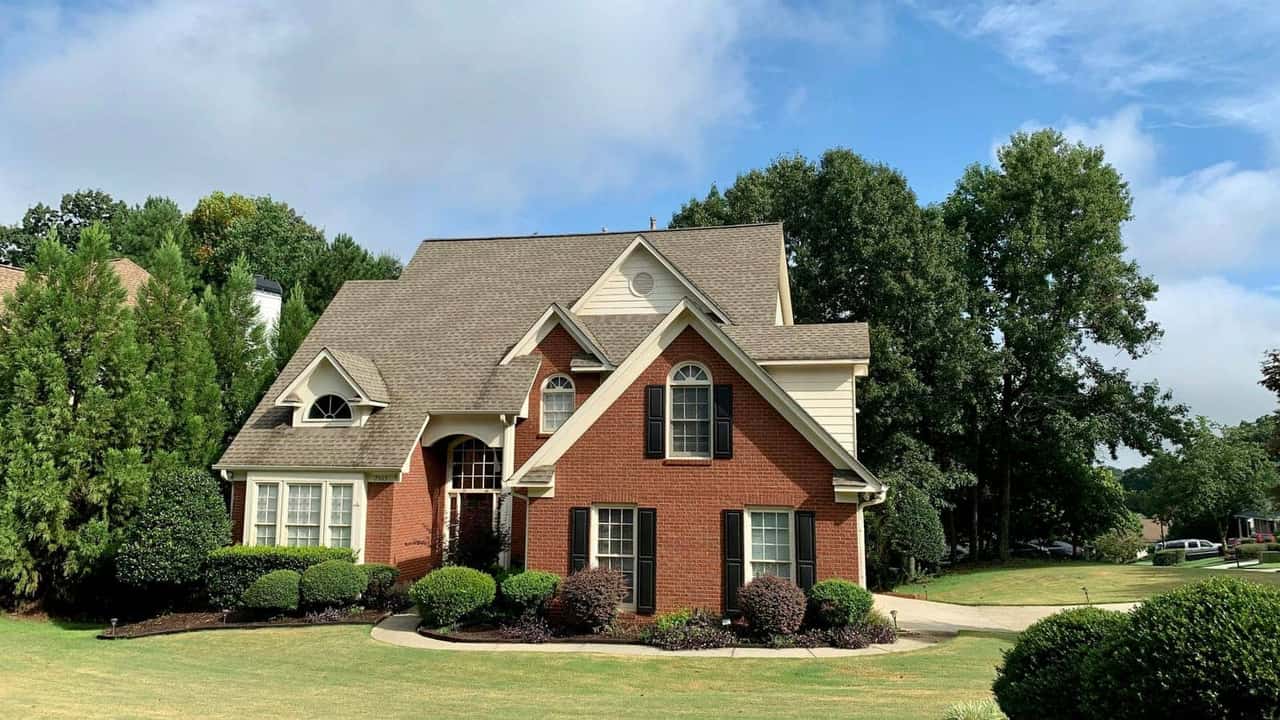
In the Denver metro, a full exterior paint job typically runs $4,500 to $10,000 for a single-story home and $8,000 to $16,000 for a two-story. Most homeowners with a standard 2,000–2,500 sq ft house on lap siding or fiber cement land between $6,500 and $11,000 for a two-coat repaint that includes a proper pressure wash, scrape-and-sand prep, caulking, spot priming, and a premium paint line on siding, trim, fascia, soffits, and doors.
Denver is a tougher market for exterior paint than almost anywhere in the country. Altitude means the UV that fades paint is roughly 20% stronger than at sea level. Afternoon thunderstorms interrupt the working window all summer. And the 100+ freeze-thaw cycles each winter pull moisture through any crack in the caulk or paint film. That's why the cheapest exterior quote is usually the most expensive choice in the end — a job that peels in year three is a full strip-and-refinish in year four, and you've paid twice for one good-looking house.
Below, we break down pricing by home size, what drives the number up or down, how the surface type changes the cost, the seasonal window that actually determines when your project gets done, and what a legitimate Denver exterior paint quote should include.
The short answer
Single-story ranch (1,200–1,800 sq ft)
$4,500 – $7,500
Lap siding or fiber cement; light prep; body + trim repaint
Larger single-story (1,800–2,400 sq ft)
$6,500 – $10,000
More siding footage and trim detail; doors and shutters included
Smaller two-story (2,000–2,400 sq ft)
$8,000 – $11,000
Standard lap-siding two-story; ladder access; body + trim + fascia
Mid-size two-story (2,400–2,800 sq ft)
$10,000 – $13,500
Most common Denver two-story scope; full repaint
Larger two-story (2,800–3,500+ sq ft)
$12,000 – $16,000
Complex trim, shutters, mixed surfaces; more wood repair common
Stucco home (single or two-story)
$6,500 – $15,000
Acrylic-elastomeric coating; crack chase; breathable paint system
| Item | Typical cost | Notes |
|---|---|---|
| Single-story ranch (1,200–1,800 sq ft) | $4,500 – $7,500 | Lap siding or fiber cement; light prep; body + trim repaint |
| Larger single-story (1,800–2,400 sq ft) | $6,500 – $10,000 | More siding footage and trim detail; doors and shutters included |
| Smaller two-story (2,000–2,400 sq ft) | $8,000 – $11,000 | Standard lap-siding two-story; ladder access; body + trim + fascia |
| Mid-size two-story (2,400–2,800 sq ft) | $10,000 – $13,500 | Most common Denver two-story scope; full repaint |
| Larger two-story (2,800–3,500+ sq ft) | $12,000 – $16,000 | Complex trim, shutters, mixed surfaces; more wood repair common |
| Stucco home (single or two-story) | $6,500 – $15,000 | Acrylic-elastomeric coating; crack chase; breathable paint system |
These ranges reflect what a licensed, insured Denver exterior painter typically charges in 2026 for a two-coat job using a premium paint line (Sherwin-Williams Emerald or SuperPaint, Benjamin Moore Aura Exterior, or equivalent), including full pressure wash, scraping and sanding, caulking, spot priming, and minor wood repair. They're not Good Vibes Painting's quoted prices — every home is different — but if you're getting quotes well outside these ranges for a straightforward job, ask what's driving the number on either end.
One note on comparing quotes: exterior paint estimates vary more than interior estimates because crews scope prep differently. A $6,000 quote and a $9,500 quote for the same two-story house almost always means one crew is doing a pressure-wash-and-paint and the other is doing a full prep. That's the single biggest lever — and we'll break it down below.
What drives exterior painting cost
Five variables explain nearly all of the price movement between a $6,000 quote and a $12,000 quote on what looks like "the same house."
Square footage and story count
This is the biggest driver, but it's not a simple multiplier. Two-story homes cost more than single-story homes not because paint costs more per gallon, but because ladder and scaffold work slows the crew down, adds safety setup time, and requires more hands on the job. A single-story ranch is usually a 3–5 day project for a standard Denver crew; a two-story of similar footprint runs 5–8 days for the same scope. That extra time is mostly what you're paying for on a two-story.
Surface type
Stucco, lap siding, and fiber cement each paint differently — and each prices differently. Lap siding and fiber cement are the fastest to paint because the surface is flat enough for spray-and-back-roll application. Stucco is textured, drinks paint, and needs a breathable elastomeric coating rather than a standard acrylic — more product, more labor, often a higher total. Board-and-batten sits between the two. We cover the detail below.
Prep scope (the big one)
Prep is where two quotes on the same house can differ by 40%. A honest prep scope for a Denver exterior includes:
- Full pressure wash of siding, trim, soffits, and eaves to strip chalked paint, pollen, and grime.
- Hand scraping and sanding of every loose or flaking area back to a sound edge.
- Caulking every siding-to-trim transition, window perimeter, and door surround with a flexible polyurethane.
- Spot priming bare wood, knots, and rusted fasteners.
- Minor wood repair or replacement of any soft or rotted boards before a drop of paint goes on.
A low quote almost always cuts one of these — usually the caulking or the scraping. That's where the paint peels in year three.
Trim, detail, and color-change complexity
Simple homes with siding-and-trim-one-color-same-as-before paint fast. Homes with crisp body-and-trim color changes, shutters, dentil trim, multiple gable accents, garage doors, front doors painted a contrasting color, and detailed fascia and soffit work all add hours of cutting-in and masking. Expect to add 10–25% to the base number for trim-heavy homes.
Paint line
Sherwin-Williams Emerald, Benjamin Moore Aura Exterior, and similar top-tier paint lines cost roughly $75–$110 per gallon, where mid-grade exterior paint runs $45–$65. On a full repaint you're usually looking at 12–20 gallons. That's $300–$800 in extra product cost for the top-tier line — and it's the single biggest lifespan multiplier you can buy for the project. In Denver UV, premium paint routinely doubles the time until the next repaint.
Common add-ons and upcharges
Garage door repaint (single or double)
$250 – $600
Sanded, primed, and finished in durable enamel
Detached shed or outbuilding
$400 – $1,500
Depends on size and condition; batched with the main house
Major wood repair or board replacement
$300 – $1,800
Rotted trim, separating siding, or soft fascia
Full trim color change
$400 – $1,200
Extra cut-in time and masking; price scales with trim linear footage
Front door refinish (pulled and sprayed)
$300 – $550
Off-site spray for factory-grade finish
Shutters (remove, spray, reinstall)
$250 – $700
Per house; off-site spraying prevents drips
Deck staining bundled same visit
$400 – $2,400
See our deck staining cost guide for detail
| Item | Typical cost | Notes |
|---|---|---|
| Garage door repaint (single or double) | $250 – $600 | Sanded, primed, and finished in durable enamel |
| Detached shed or outbuilding | $400 – $1,500 | Depends on size and condition; batched with the main house |
| Major wood repair or board replacement | $300 – $1,800 | Rotted trim, separating siding, or soft fascia |
| Full trim color change | $400 – $1,200 | Extra cut-in time and masking; price scales with trim linear footage |
| Front door refinish (pulled and sprayed) | $300 – $550 | Off-site spray for factory-grade finish |
| Shutters (remove, spray, reinstall) | $250 – $700 | Per house; off-site spraying prevents drips |
| Deck staining bundled same visit | $400 – $2,400 | See our deck staining cost guide for detail |
Bundling matters. Exterior painting, deck staining, and outbuilding work all share the same mobilization cost — trucks, ladders, drop cloths, setup time. Booking them together usually saves $200–$600 versus scheduling them as separate trips. If you've been meaning to refinish the deck anyway, it's almost always cheaper to do it the same week the exterior painting crew is on-site. The same logic applies to a fence stain, a shed repaint, or touching up a pergola — scope it together. For the deck itself, our separate deck staining cost guide breaks down pricing in detail.
Stucco vs. lap siding vs. fiber cement
The surface under your paint is the second-biggest variable in the quote after home size, and it changes the product, the application method, and the price.
Lap siding (wood, hardboard, LP SmartSide). The most common Denver exterior surface. Sprays fast, back-rolls clean, and accepts standard acrylic exterior paints. Lap siding homes typically price at the low end of their size band unless there's significant wood rot. Plan on two coats of a premium acrylic (Emerald or Aura) with a spray-and-back-roll application so the paint bonds into the substrate rather than sitting on top.
Fiber cement (HardiePlank, James Hardie). Paints similarly to lap siding — maybe slightly faster because the surface is more uniform — and holds paint unusually well. If your fiber cement is pre-painted from the factory and in good shape, you're mostly paying for a refresh coat and trim work rather than a full repaint. That shows up as a 10–15% discount versus weathered wood siding of the same size.
Stucco (traditional or synthetic). Different paint, different process, different price. Stucco needs a breathable acrylic-elastomeric coating that flexes with Colorado's temperature swings and seals the hairline cracks that come with every Denver winter. The surface is textured, which means the paint goes on thicker and uses more product — expect 15–25% more in material than lap siding of the same footprint. Prep also includes a crack chase (filling hairline cracks with a paintable elastomeric sealant) before the first coat goes on. A proper stucco repaint on a single-story lands at $6,500–$11,000; two-story stucco runs $11,000–$15,000+.
Why Denver exterior paint jobs are different
Colorado punishes exterior finishes in ways milder climates don't. Altitude alone means the UV reaching your south- and west-facing walls is roughly 20% stronger than at sea level. Add 300+ sunny days per year and you get more direct UV in one Denver summer than a coastal Pacific Northwest house sees in two.
Freeze-thaw is the second half of the story. Denver winters cycle above and below freezing 100+ times — every freeze pushes moisture into any crack in the paint film or caulk line, and every thaw pulls it back out a little looser than before. Within 3–4 years on a poorly prepped job, that cycle lifts the paint off the siding in sheets. A properly caulked and primed surface, by contrast, keeps water out of the substrate entirely and lasts 8–12 years on a premium paint line.
This is why a cheap exterior paint job in Denver is almost never actually cheap. You're paying for two full repaints in the span that a proper one covers. A top-tier paint line costs $300–$800 more in product than a mid-grade, and a full prep scope adds maybe $1,500–$3,000 in labor over a shortcut job — for roughly double the lifespan. The math works in one direction. For our full prep-and-paint scope on Denver exteriors, that's what our exterior painting service is built around.
Best time of year to paint an exterior in Denver
Late April through mid-October is the working window for Denver exteriors. Paint needs daytime highs above its minimum application temperature (usually 50°F for premium acrylics and elastomerics) and at least 24–48 hours of dry weather after each coat for a proper cure. Outside that window, the paint skins over on the surface but doesn't bond properly to the substrate, which is how a perfectly good-looking paint job fails a year later.
Within the season, different months have different trade-offs:
- April and May. Cool enough to avoid summer overheat on dark colors, but afternoon thunderstorms and late snow can still push a schedule. Best for smaller homes that can finish inside a narrow weather window.
- June through August. Peak season. Most predictable weather, but also when every Denver exterior painter is booked — expect to schedule 3–6 weeks out. Afternoon thunderstorms interrupt most summer days, so crews usually start at sunrise and knock off by 2–3 p.m.
- September and early October. Quietly the best paint weather of the year. Cool days, dry air, low UV stress on fresh paint, fewer thunderstorms. The window closes fast once overnight lows start dropping below 40°F — book by mid-August to lock in September dates.
Neighborhood matters too. In Lakewood and Littleton at 5,500–6,000 feet, the working window matches the broader metro. In Golden on the foothill edge, strong afternoon sun on west-facing walls shortens the workable hours of each day. Up in Evergreen at 7,200 feet, the season itself is noticeably shorter — late May to early October is realistic — and summer weeks book out faster than almost anywhere else in our service area.
How to compare exterior quotes without getting burned
A one-line exterior paint quote is a red flag. A legitimate Denver exterior painting quote should itemize, at minimum:
- Scope of surfaces — body, trim, fascia, soffits, doors, shutters, garage doors, and any detached structures called out separately.
- Prep scope — pressure wash (with PSI), scrape and sand methodology, caulking scope, spot priming, and any wood repair allowance.
- Paint product, line, and sheen — brand, exact line (Emerald, SuperPaint, Aura Exterior, etc.), and sheen per surface (flat/satin/semi-gloss).
- Number of coats — two is standard on a proper repaint; one coat is a "refresh" and should be priced and labeled that way.
- Color plan — body, trim, accent, and door colors all explicit, with any color-change labor called out.
- Timeline — start date, expected number of working days, weather-delay policy.
- Warranty — what's covered (peeling, premature fading, caulk failure) and for how long. One to three years on prep-and-paint is standard for quality Denver work.
- Cleanup and protection — landscaping coverage, window and fixture masking, daily job-site cleanup.
When you get a quote from us for exterior painting, you'll see all of the above in writing, along with a day-by-day schedule so you know exactly what to expect. If you're bundling exterior work with a deck staining or a shed repaint, we'll scope everything together so you pay one mobilization fee instead of three.
Bottom line
Exterior painting in Denver sits in a wide but predictable range. A single-story ranch starts around $4,500; a typical two-story lands between $8,000 and $13,500; a larger or stucco two-story can reach $16,000+. The number comes down to five drivers: home size and story count, surface type, prep scope, trim and detail complexity, and paint line. For the best long-term value in Denver's climate, a two-coat premium paint job over a full pressure-wash-scrape-sand-caulk-prime prep is almost always the right call — it's the difference between 8–12 years of curb appeal and 3–4.
For a real number on your home, we'll walk the exterior with you, scope prep and repair separately from painting, and send an itemized exterior painting quote within one business day — get a free quote here. Planning interior work too? Our interior painting cost guide breaks that side down the same way.
Related services